

ELECTRICAL TAPE · CONDUCTIVE CONSTRUCTIONS
Conductive Tape for Electrical Contacts
Conductive tape can support electrical contacts, grounding and shielding in electronic assemblies. The specific tape construction, direction of conductivity and contact surfaces determine the choice. Krückemeyer GmbH helps you match the product and supplied format to your application.
01
Selection criteria
Choose conductive tape for the contact task
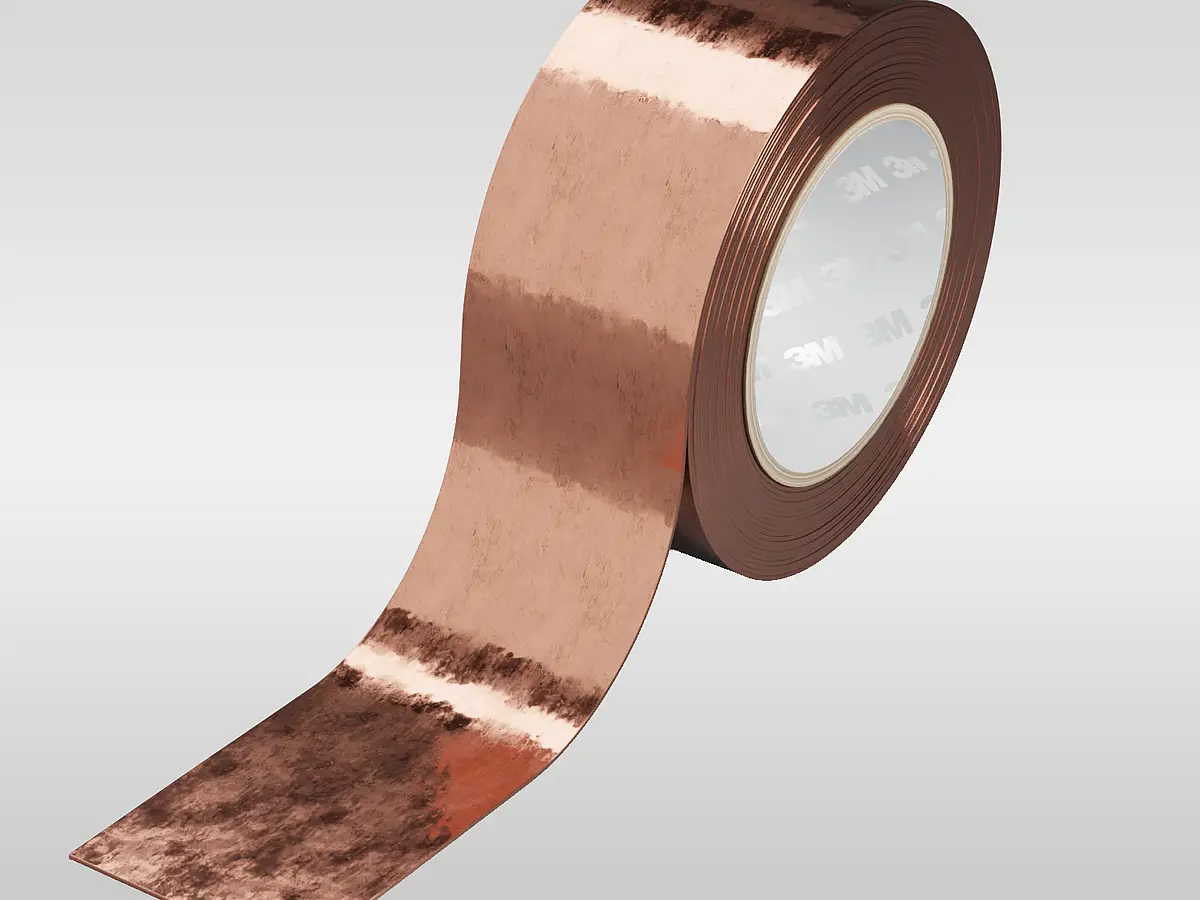
Start with the electrical path: must contact run along the tape surface only, or also through the adhesive layer? A copper backing with conductive acrylic adhesive, as in tesa 60537, differs from a double-sided conductive nonwoven tape such as tesa 60371 and from a conformable conductive foam such as tesa 60217. Also check contact area, component geometry and the intended task: shielding, grounding or a conductive connection.
02
CONDUCTIVE TAPES
Conductive tapes in the range
The listing shows electrically conductive tape constructions with different backings and adhesives. Compare the individual product specifications for your contact task.
No products found
No products are currently listed in this category. Request a call back and we will help you find the right product.
Request a callback03
ELECTRICAL CONTACT TASK
Distinguish shielding, grounding and conduction direction
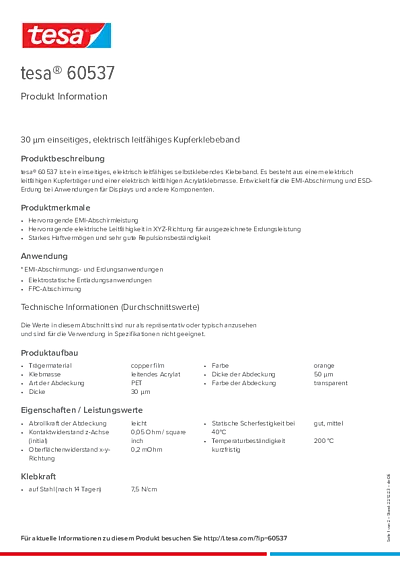
Electrical conductivity does not by itself establish suitability for every shielding or ESD task. In tesa 60537, both the copper backing and acrylic adhesive are conductive; the product is described for EMI shielding and ESD grounding. The double-sided nonwoven tape tesa 60371 is described, among other uses, for grounding flexible circuits and antennas. With anisotropic 3M 9703, conduction direction matters when joining flexible circuits. Therefore, define the contact partners, required electrical path, available bonding area and operating conditions. We can review product data and converting options with you to identify a suitable format.
04
COPPER TAPE DATA SHEET
05
ELECTRICAL SELECTION QUESTIONS
What makes a tape electrically conductive?
That depends on the specific product construction. In tesa 60537, the backing is copper and the adhesive is conductive acrylic. tesa 60371 instead combines a conductive nonwoven backing with conductive acrylic adhesive. For your assembly, it also matters whether the required connection runs along the surface or through the adhesive layer and whether the contact partners are connected as intended. The term “conductive” alone does not replace this assessment.
How do conductive tape and shielding tape differ?
Conductivity describes an electrical property of a particular tape construction; shielding is a possible application that must be supported for the specific product. Copper tape tesa 60537 is described for EMI shielding and ESD grounding. This does not establish general shielding performance for every conductive tape or installation. Selection also depends on the contact arrangement, the assembly to be shielded and the product specifications.
When might a conductive nonwoven or foam tape be suitable?
A nonwoven construction may suit double-sided conductive bonding: tesa 60371 lists grounding applications for flexible circuits and antennas, among others. The conductive foam in tesa 60217 is a different construction for EMI shielding and grounding applications. Suitability depends on the contact surfaces and geometry of your assembly. Check both the electrical function and the mechanical installation conditions against the specific product.
Why does the direction of conductivity matter in conductive tapes?
It determines whether the required electrical path matches the described tape. tesa 60537 specifies conductivity in the XYZ direction; 3M 9703 is described as an anisotropically conductive adhesive film for joining flexible circuits. These constructions must not be treated as equivalent. Define the surfaces between which contact must be made before selecting a tape, then compare that requirement with the specifications of the chosen product.
06
Request advice
Describe the contact partners, component geometry and required electrical function. We will review suitable product information and an appropriate converted format with you.
Enquire about conductive tape for your assembly
Tell us about the contact task and the format you need. We will review product selection and possible converting options with you.

ADHESIVE TECHNOLOGY · ELECTRICAL CONTACTS
Thomas Klein
Contact for products
Talk to Thomas Klein about contact surfaces, conduction direction and a suitable format for your conductive tape.